
Malappuram – Where Nature Meets Tradition
Experience the soul of Kerala through lush green landscapes, ancient traditions, vibrant festivals, and warm-hearted people.
Nestled in the heart of Kerala, Malappuram is a land where natural beauty blends seamlessly with rich cultural heritage. From rolling hills and serene rivers to historic mosques, temples, and colorful festivals, Malappuram offers a unique travel experience filled with peace, culture, and adventure.
Explore misty hill views, sacred pilgrimage centers, traditional art forms, and local flavors that tell stories passed down through generations. Whether you’re a nature lover, culture enthusiast, or a traveler seeking authentic Kerala experiences, Malappuram welcomes you with open arms.
About Malappuram
Malappuram is a beautiful district located in northern Kerala, known for its cultural richness, scenic beauty, and historical importance. Nestled between the Western Ghats and the Arabian Sea, Malappuram offers a unique blend of nature, heritage, and tradition.
The name “Malappuram” means “Land of Hills”, perfectly reflecting its green landscapes, flowing rivers, and peaceful surroundings. The district is widely known for its contribution to literature, sports, festivals, and freedom movements.
Geographical Profile
Total Area: ~3,554 sq. km
Boundaries:
East: Palakkad District
West: Arabian Sea
North: Kozhikode and Wayanad Districts
South: Thrissur District
Geographical Overview:
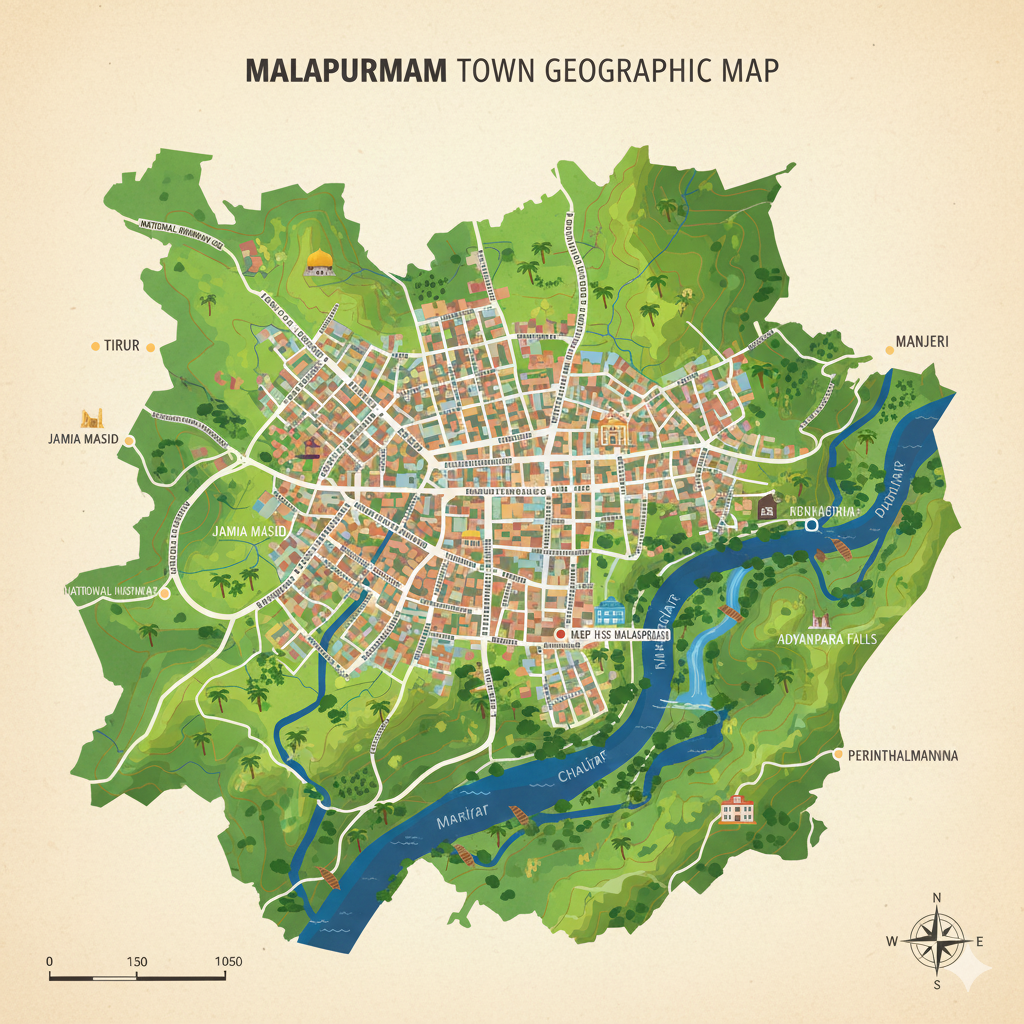
Malappuram is located in the northern part of Kerala and is one of the most populous districts in the state. The district features a diverse landscape that includes coastal plains, midland hills, and highland regions of the Western Ghats. Malappuram is known for its fertile agricultural land, lush greenery, and scenic rivers.
Historical Background
Malappuram has a glorious and eventful history. It played a major role during the medieval period and the freedom struggle of India.
The region was once part of the Zamorin Kingdom of Calicut and later became an important center during the Mamankam festivals, which were held on the banks of the Bharathapuzha River. These grand events symbolized political power and cultural pride.
Malappuram also witnessed important movements during the British period, including resistance struggles and social reform movements. The district has always stood strong in protecting its cultural and social values.
Cultural Identity
Malappuram is often referred to as the cultural heart of Malabar. The district has a rich tradition of literature, art, music, and folklore.
Some key cultural features include:
Strong literary heritage
Traditional art forms and folk performances
Deep-rooted religious harmony
Celebrations that bring communities together
Festivals like Mamankam, Vairankode Vela, Kondotty Nercha, and Kottakkal Pooram reflect the cultural unity and vibrant spirit of the people.
People and Lifestyle
The people of Malappuram are known for their simplicity, hospitality, and strong social bonds. The district is a fine example of communal harmony, where people of different religions and traditions live together peacefully.
Family values, respect for elders, education, and cultural pride are deeply rooted in everyday life. Football, literature, and social activities play an important role in shaping the lifestyle of the people.
Community gatherings, festivals, and local celebrations strengthen the sense of togetherness among the people. Traditional food habits, modest living, and a strong connection to nature reflect the simple yet meaningful lifestyle of Malappuram. The youth actively participate in sports, arts, and social initiatives, carrying forward the district’s values while embracing modern ideas. This balance between tradition and progress makes the people of Malappuram warm, welcoming, and culturally rich.
Language and Education
Malayalam is the primary language spoken in Malappuram, reflecting the rich cultural and literary heritage of the region. The district has made remarkable progress in education and literacy over the years, becoming one of the leading educational hubs in Kerala. Malappuram is home to several universities, colleges, religious and cultural learning centers, modern educational institutions, and renowned research and Ayurveda centers. Education is considered a strong pillar of development, shaping the social and economic growth of the district.
Along with formal education, Malappuram places great importance on value-based learning and cultural knowledge. Traditional learning systems coexist with modern education, creating a balanced environment for intellectual and personal growth. The district has produced many scholars, educators, writers, and professionals who have contributed significantly at state and national levels. This strong educational foundation continues to empower the younger generation and plays a vital role in the overall progress of Malappuram.
Economy and Development
Malappuram’s economy is mainly supported by agriculture, trade, education, healthcare, and overseas employment. Crops such as coconut, rubber, banana, and various spices play a major role in supporting rural livelihoods. Small-scale industries, local markets, and traditional businesses contribute significantly to the district’s economy and provide employment to thousands of people.
A large number of residents work in Gulf countries, and their remittances have greatly contributed to the region’s economic growth and improved living standards. Over the years, Malappuram has witnessed steady development in infrastructure, including better road connectivity, modern healthcare facilities, educational institutions, and digital services. While embracing progress and modernization, the district continues to preserve its cultural values, social harmony, and traditional way of life, making Malappuram a balanced and progressive region.
Social Harmony and Progress
One of the strongest identities of Malappuram is its social unity. The district stands as a symbol of peaceful coexistence, cultural respect, and collective growth. People from different religious and social backgrounds live together with mutual understanding, making Malappuram a model of harmony and inclusiveness.
The people actively participate in social welfare activities, educational development, cultural preservation, and community-based initiatives. Voluntary organizations, youth groups, and local bodies play an important role in addressing social issues, promoting education, and supporting the underprivileged. Community participation is deeply rooted in daily life and reflects the strong sense of responsibility among the people.
In addition, Malappuram has a long tradition of social reform and public awareness. The district has produced many social leaders and reformers who have worked towards equality, education, and social justice. This strong foundation of unity and cooperation continues to guide Malappuram’s progress, making it a socially strong and culturally rich region.
Conclusion
Malappuram is not just a district — it is a land of stories, traditions, and strong values. With its rich history, cultural depth, progressive mindset, and warm-hearted people, Malappuram continues to grow while staying rooted in its heritage.
It represents the true spirit of Kerala — a perfect blend of tradition, unity, and modern development.
The district’s scenic landscapes, historical landmarks, vibrant festivals, and thriving communities make it a unique place where the past and present coexist beautifully. From its lush green fields and coconut groves to bustling towns and modern infrastructure, Malappuram reflects a harmonious balance between nature, culture, and progress.
At the heart of Malappuram are its people — resilient, welcoming, and proud of their identity.